Entrying
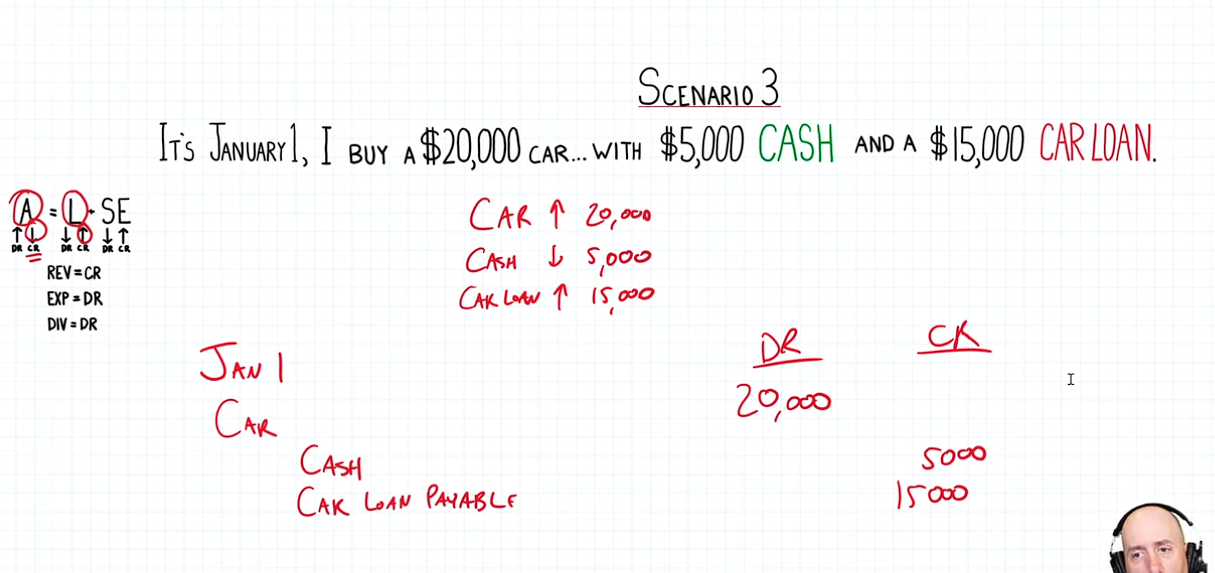
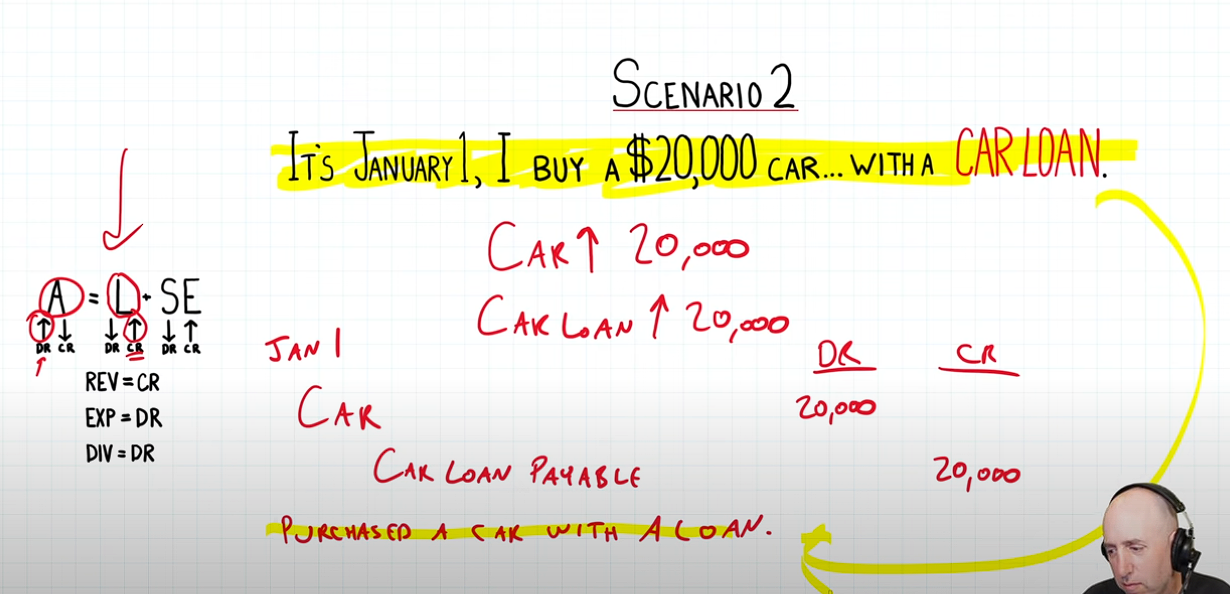
Always ask, do cash changes hand? Start with Asset, then ask whether it’s Credit or Debit. Then for every increase in assets, there balance reaction to it,
Format etc Coding
T Account Chart of Accounts
balance here is the equation, the equation we called it “balance”
to start posting journal entries to T-account, you first need to know the “opening balance”, start building the T-account first, then the opening balance for each account.
from the journal entries of daily transaction, we then move the debit/credit to the account.
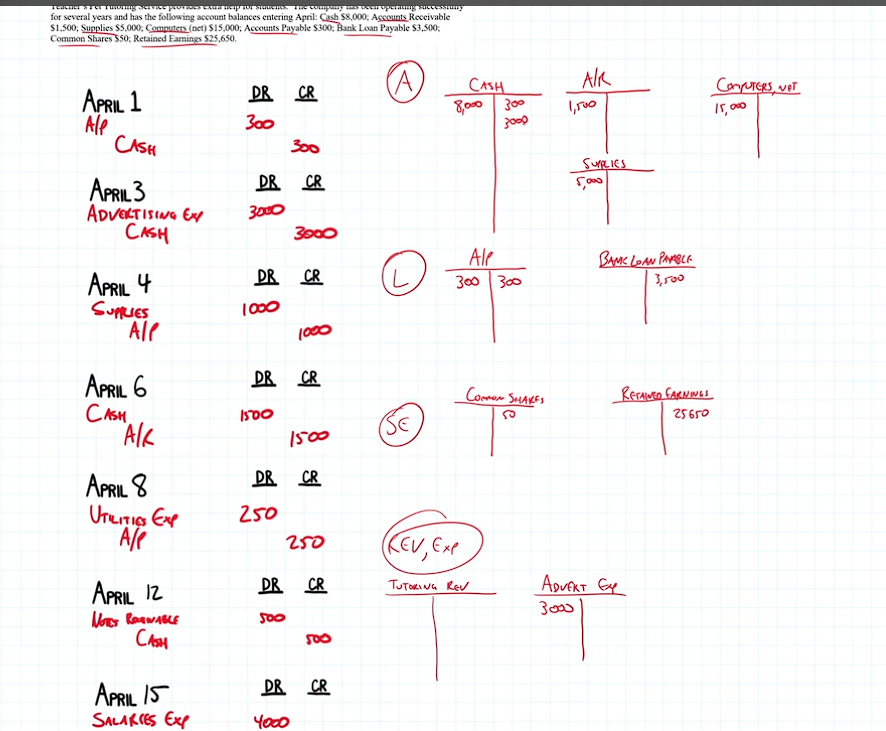
example of completed T-account (without totalling)
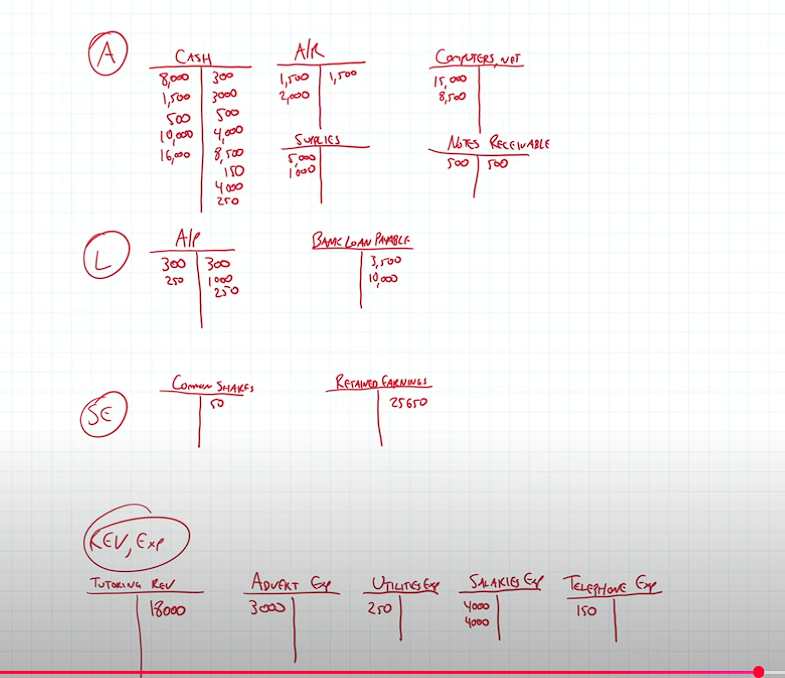
When you start posting entries to T-Account, you quickly realized some accounts that is effected by the new post, will need to be “adjusted”, this is where we call it Unadjusted. For us to adjust it to achieve true balance, we start on our Trial Balance.
For totaling the key of totaling is that, sum all of them. Then always “big side” - “small side”, then the big side would get the balance.
Type of Account Breakdown accounts based of A = L + SE and Revenue, Expenses, Dividends
The reason this works is that the acronym is a visual representation of the fundamental accounting equation, A=L+E
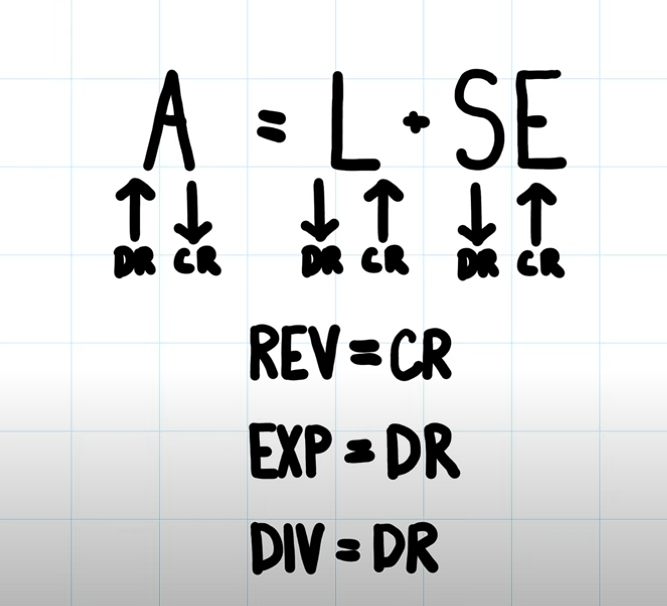
This is everything
Assets (A) are on the opposite side of the equation from Liabilities (L) and Equity (E), so they behave oppositely in terms of debits and credits.
Expenses and Dividends are accounts that ultimately reduce equity, so they “cancel out” the credit rule for equity and follow the debit rule instead. This framework provides a great shortcut to quickly determine which side of the transaction to debit and which to credit.
If I want the asset increase, we debit the asset, if we want them to decrease we credit them.
Revenue always help our SE which then it credit, increasing our SE. Expenses hurt our SE, which then it’s always take DR.
Another way to break this down is using the DEALER framework, another framework is DEAD CLIC.
DEALER framework - allow proper channel/attribution to build the accounting equation
Yes, the DEALER framework is a very helpful mnemonic to remember the rules for how debits and credits affect different accounts.1 It’s a key part of understanding the double-entry system.
Here’s what each letter stands for:
DEBIT:
- Dividends
- Expenses2
- Assets3
These accounts increase with a debit and decrease with a credit
CREDIT:
- Liabilities5
- Equity
- Revenue6
These accounts increase with a credit and decrease with a debit.7
DEAD CLIC framework - allow proper channel/attribution to build the accounting equation
Debit = Expenses Assets Drawings Credit = Liabilities Income Capital