FA1
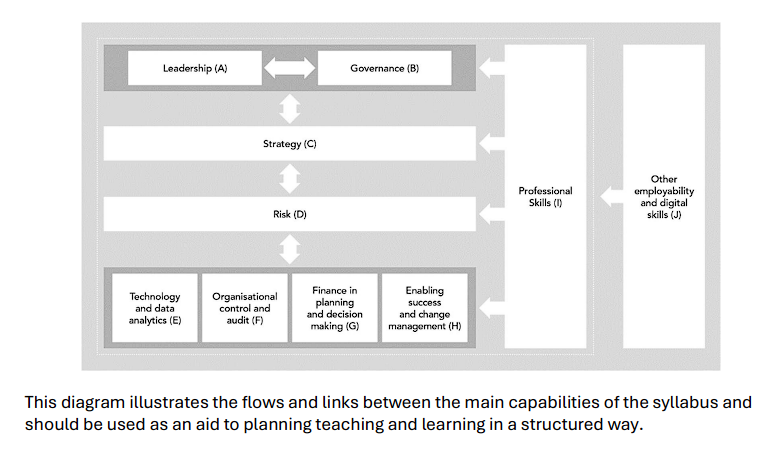
- A Describe types of business transactions and documentation
- B Explain the duality of transactions and double-entry bookkeeping
- C Summaries the banking system and transactions
- D Process payroll transactions
- E Prepare general ledger accounts
- F Record cash and bank transactions
- G Record sales and credit transactions
- H Record purchases and credit transactions
- I Perform reconciliations
- J Prepare the trial balance
MA1
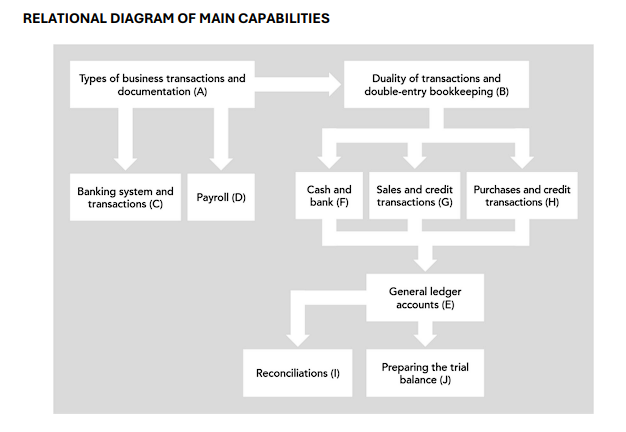
A Explain the nature and purpose of cost and management accounting B Identify the transaction processing systems in a costing system and correctly code data C Classify costs by nature, behaviour and purpose D Account for material, labour and other expenses E Create and use spreadsheets
FA2
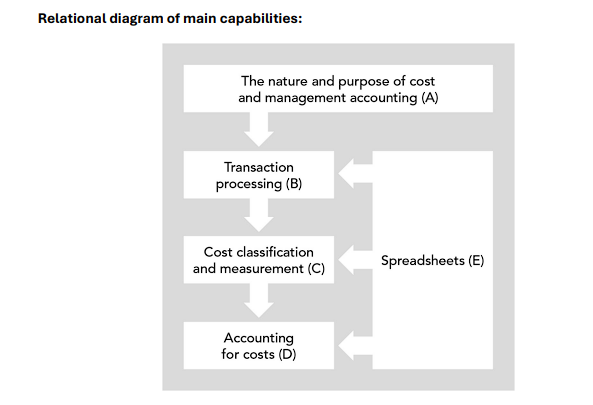
A Explain accounting principles, concepts and characteristics B Describe the principles and process of double-entry bookkeeping C Prepare journal entries and general ledger accounts D Record transactions and events E Perform reconciliations F Prepare a trial balance (including identifying and correcting errors) G Process year-end manual journal entries and prepare financial statements H Account for partnerships.
MA2
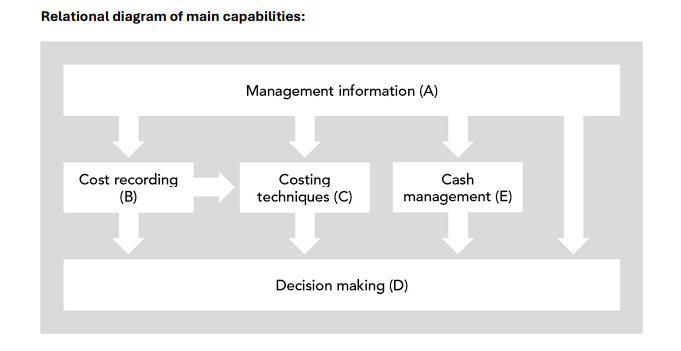
A Explain the role of costing within the organisation and how costs are classified B Describe and record costs by classification C Explain and apply cost accounting techniques D Use management accounting techniques to make and support decision-making. E Explain the principles of cash management
FBT
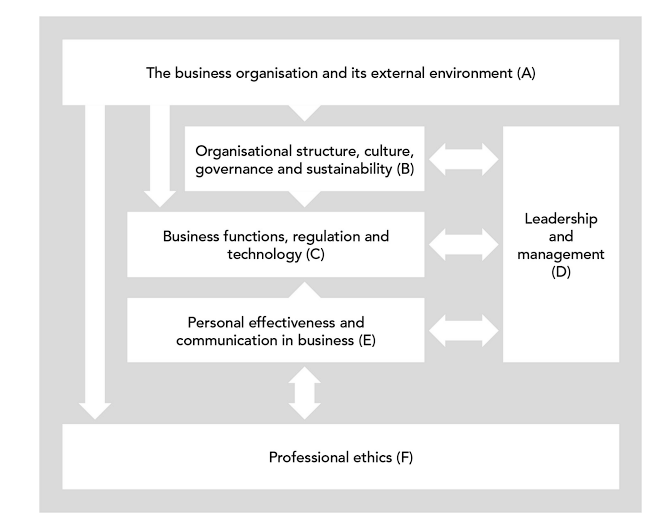
A Understand the purpose and types of businesses and how they interact with key stakeholders and the external environment. B Understand organisational structure, culture, the role of corporate governance and sustainability. C Recognise accounting and finance functions in business and the regulations, systems, controls and technologies that affect them. D Recognise the principles of leadership and how teams and individuals are managed, motivated and developed. E Understand the importance of personal effectiveness as the basis for effective team and organisational behaviour. F Recognise that all aspects of business and finance should be conducted in a manner which complies with, and is in the spirit of, accepted professional ethics and professional values.
FFA
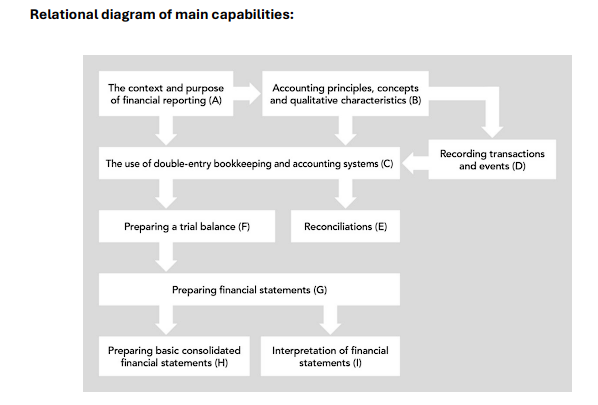
A Explain the context and purpose of financial reporting B Define the accounting principles, concepts and qualitative characteristics of useful financial information C Demonstrate the use of double-entry bookkeeping and accounting systems D Record transactions and events E Perform reconciliations F Prepare a trial balance G Prepare financial statements H Prepare basic consolidated financial statements I Interpret financial statements
FMA
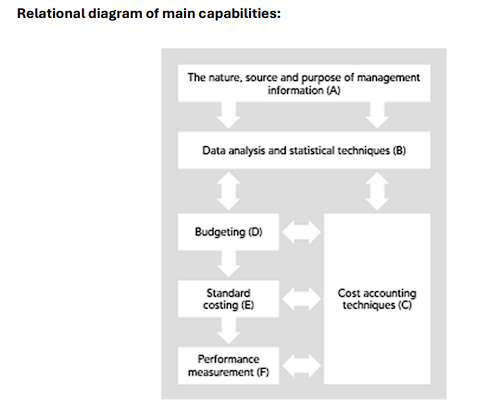
A Explain the nature, source and purpose of management information B Explain and apply data analysis and statistical techniques C Explain and apply cost accounting techniques D Prepare budgets for planning and control E Compare actual costs with standard costs and analyse any variances F Explain and apply performance measurements and monitor business performance.
FAU
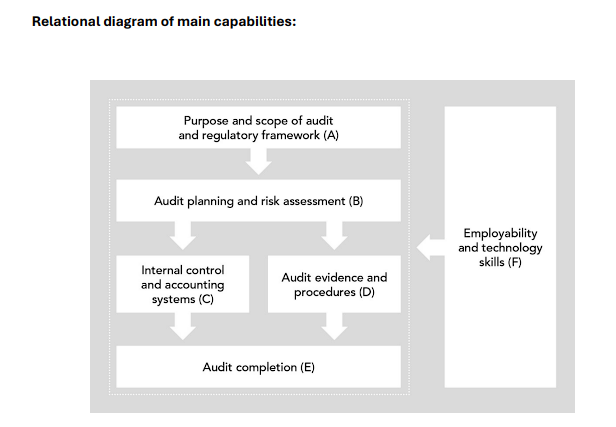
A Explain the purpose and scope of an audit and its regulatory framework B Explain how an auditor assesses risk and plans an audit C Identify the principles of internal control and describe and evaluate the features of accounting systems D Identify and describe audit evidence and audit procedures required to meet the objectives of an audit and apply International Standards on Auditing (ISAs) E Explain how the audit is completed and reflected in the different types of auditor’s reports F Demonstrate employability and technology skills
FFM
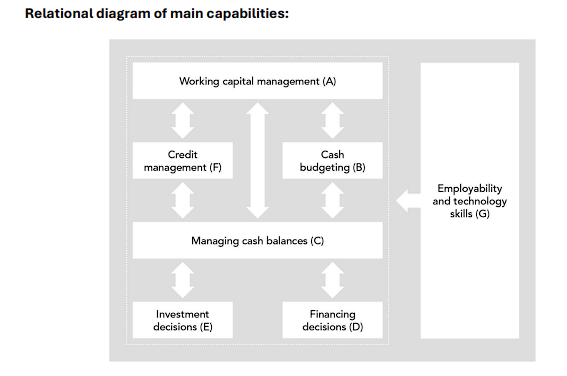
A Explain and apply the principles of working capital management B Apply a range of accounting techniques used to forecast cash within the organisation C Describe methods and procedures for managing cash balances D Explain principles in making medium to long term financing decisions E Explain and apply principles in making capital investment decisions F Describe credit management methods and procedures G Demonstrate employability and technology skills
LW
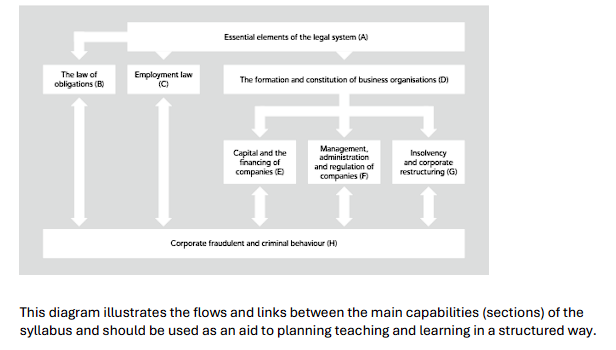
A Identify the essential elements of the Malaysian legal system including the main sources of law B Recognise and apply the appropriate legal rules relating to the law of obligations C Explain and apply the law relating to employment relationships D Distinguish between alternative forms and constitutions of business organisations E Recognise and compare types of capital and the financing of companies F Describe and explain how companies are managed, administered and regulated G Recognise the legal implications relating to insolvency and corporate restructuring H Demonstrate an understanding of corporate fraudulent and criminal behaviour
PM
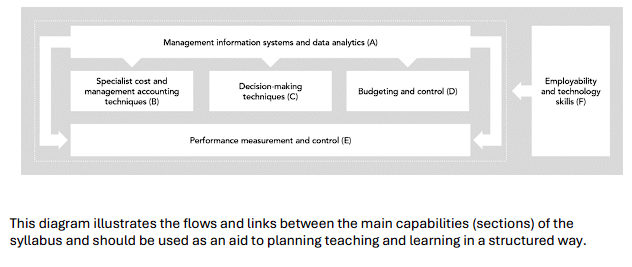
A Identify and discuss the management information systems, the uses and controls over information and big data and data analytics used by organisations to manage and measure performance. B Explain and apply cost and management accounting techniques. C Select and appropriately apply decision-making techniques to facilitate business decisions and promote efficient and effective use of scarce business resources, appreciating the risks and uncertainty inherent in business and controlling those risks. D Identify and apply appropriate budgeting techniques, including quantitative techniques, and methods for planning and control and use standard costing systems to measure and control business performance and to identify remedial action. E Assess the performance of private, public and not-for-profit organisations from both a financial and non-financial viewpoint, appreciating the problems of controlling divisionalised businesses and the importance of allowing for sustainability and external aspects. F Demonstrate required employability and technology skills.
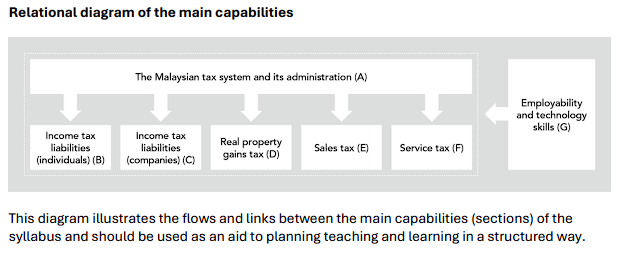
TX-MYS
A Explain the operation and scope of the tax system and the obligations of taxpayers, taxable person, employers and/or their agents and the implications of non-compliance B Explain and compute the income tax liabilities of individuals C Explain and compute the income tax liabilities of companies D Explain and compute real property gains tax E Explain and compute sales tax F Explain and compute service tax G Demonstrate employability and technology skills
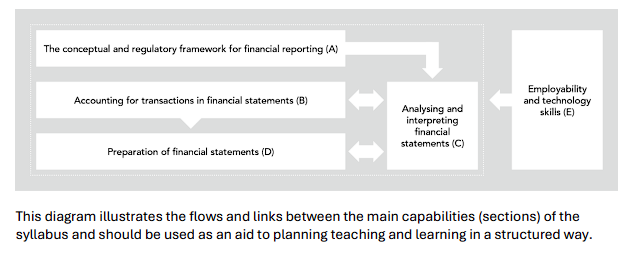
FR
A Discuss and apply conceptual and regulatory frameworks for financial reporting B Account for transactions in accordance with IFRS Accounting Standards C Analyse and interpret financial statements. D Prepare and present financial statements for single entities and business combinations in accordance with IFRS Accounting Standards E Demonstrate employability and technology skills
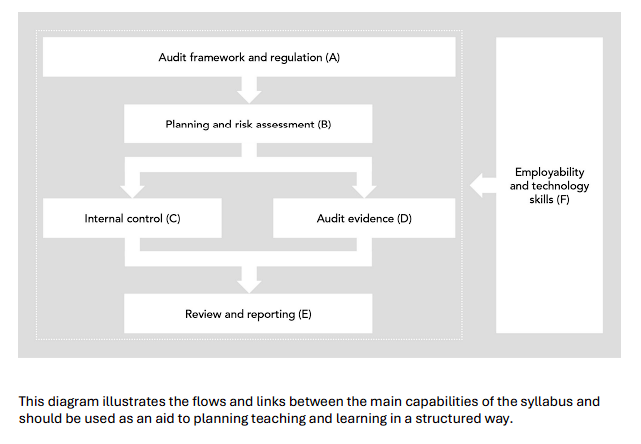
AA
A Explain the concept of audit and assurance and the functions of audit, corporate governance, including ethics and professional conduct. B Demonstrate how the auditor obtains and accepts audit engagements, obtains an understanding of the entity and its environment, assesses the risk of material misstatement (whether arising from fraud or other irregularities) and plans an audit of financial statements. C Describe and evaluate internal controls, techniques and audit tests, including IT systems to identify and communicate control risks and their potential consequences, making appropriate recommendations. Describe the scope, role and function of internal audit. D Identify and describe the work and evidence obtained by the auditor and others required to meet the objectives of audit engagements and the application of the International Standards on Auditing (ISAs). E Explain how consideration of subsequent events and the going concern principle can inform the conclusions from audit work and are reflected in different types of auditor’s report, written representations and the final review and report. F Demonstrate employability and technology skills.
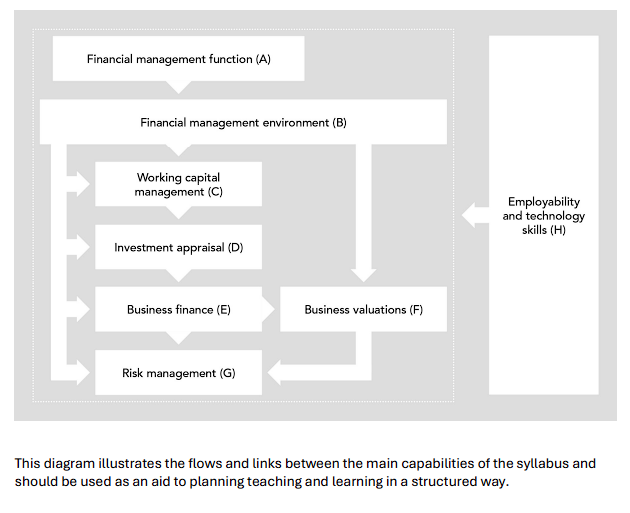
FM
A Discuss the role and purpose of the financial management function B Assess and discuss the impact of the economic environment on financial management C Discuss and apply working capital management techniques D Carry out effective investment appraisal E Identify and evaluate alternative sources of business finance F Discuss and apply principles of business and asset valuations G Explain and apply risk management techniques in business H Demonstrate employability and technology skills
AFM
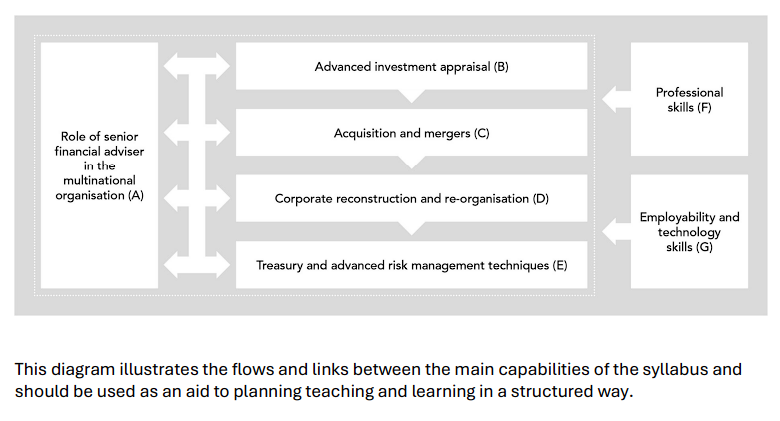
A Explain and evaluate the role and responsibility of the senior financial executive or advisor in meeting conflicting needs of stakeholders and recognise the role of international financial institutions in the financial management of multinationals B Evaluate potential investment decisions and assessing their financial and strategic consequences, both domestically and internationally C Assess and plan acquisitions and mergers as an alternative growth strategy D Evaluate and advise on alternative corporate re-organisation strategies E Apply and evaluate alternative advanced treasury and risk management techniques F Apply a range of professional skills in addressing requirements within the Advanced Financial Management exam, and in preparation for, or to support, current work experience G Apply employability and technology skills
APM
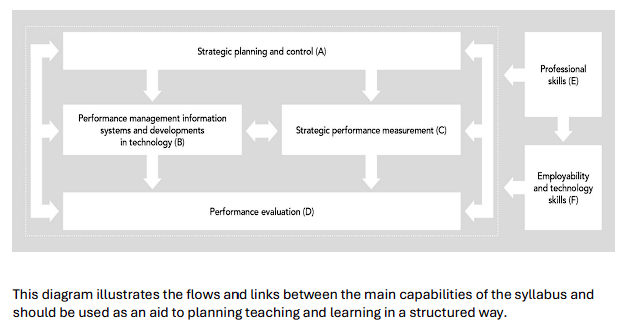
A Use strategic planning and control models to plan and monitor organisational performance B Identify and evaluate the design features of effective performance management information and monitoring systems and recognise the impact of developments in technology on performance measurement and management systems. C Apply appropriate strategic performance measurement techniques in evaluating and improving organisational performance D Advise clients and senior management on strategic business performance evaluation E Apply a range of professional skills in addressing requirements within the Advanced Performance Management exam, and in preparation for, or to support, current work experience F Employability and technology skills
AAA-INT
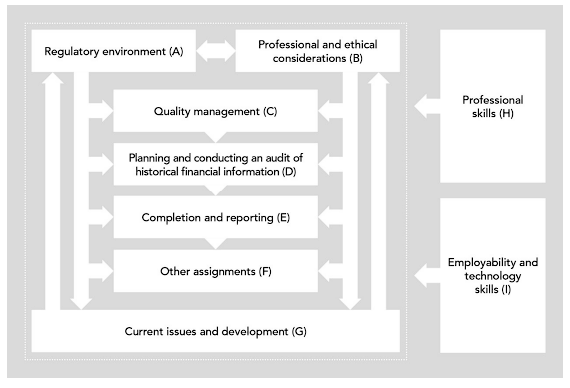
A Recognise the legal and regulatory environment and its impact on audit and assurance practice B Demonstrate the ability to work effectively on an assurance or other service engagement within a professional and ethical framework C Assess and recommend appropriate quality management policies and procedures in practice management and recognise the auditor’s position in relation to the acceptance and retention of professional appointments D Identify and formulate the work required to meet the objectives of audit assignments and apply the International Standards on Auditing E Evaluate findings and the results of work performed and draft suitable reports on assignments F Identify and formulate the work required to meet the objectives of non-audit assignments G Understand the current issues and developments relating to the provision of audit-related and assurance services H Apply a range of professional skills in addressing requirements within the Advanced Audit and Assurance exam, and in preparation for, or to support current work experience I Demonstrate employability and technology skills
SBR-INT
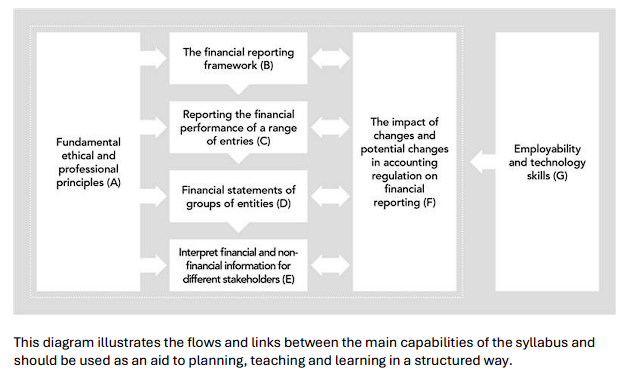
A Apply fundamental ethical and professional principles to ethical dilemmas and discuss the consequences of unethical behaviour B Evaluate the appropriateness of the financial reporting framework and critically discuss changes in accounting regulation C Apply professional judgement in the reporting of the financial performance of a range of entities NOTE the learning outcomes in Section C of the syllabus can apply to: single entities, groups, public sector entities and not-for profit entities (where appropriate) D Prepare the financial statements of groups of entities E Interpret financial and non-financial information for different stakeholders F Communicate the impact of changes and potential changes in accounting regulation on financial reporting G Demonstrate employability and technology skills
SBL
A Apply excellent leadership and ethical skills to set the ‘tone from the top’ and promote a positive culture within the organisation, adopting a whole organisation perspective in managing performance and value creation. B Evaluate the effectiveness of the governance and agency system of an organisation and recognise the responsibility of the board or other agents towards their stakeholders, including the organisation’s sustainability and social responsibilities and the reporting implications. C Evaluate the strategic position of the organisation against the external environment and the availability of internal resources, to identify feasible strategic options. D Analyse the risk profile of the organisation and of any strategic options identified, within a culture of responsible risk management. E Select and apply appropriate information technologies and data analytics, to analyse factors affecting the organisation’s value chain to identify strategic opportunities and implement strategic options within a framework of robust IT security controls. F Evaluate management reporting and internal control and audit systems to ensure compliance and the achievement of organisation’s objectives and the safeguarding of organisational assets G Apply high level financial techniques from the Applied Skills exams in the planning, implementation and evaluation of strategic options and actions. H Enable success through innovative thinking, applying best in class strategies and disruptive technologies in the management of change; initiating, leading and organising projects, while effectively managing talent and other business resources. I Apply a range of professional skills in addressing requirements within the Strategic Business Leader examination and in preparation for, or to support, current work experience. J Demonstrate other employability and digital skills in preparing for and taking the Strategic Business Leader examination.