Training vs. Performance.
Training, Learning and Studying evolved around the same category.
Performance is what matter.
If we make mistake during training, that’s okay, what we don’t want to do is to make mistake during performance. So we need to adjust our training methods based of performance.
Desirable Difficulties
desirable difficulties means increasing the mistakes made during the training phase to improve performance
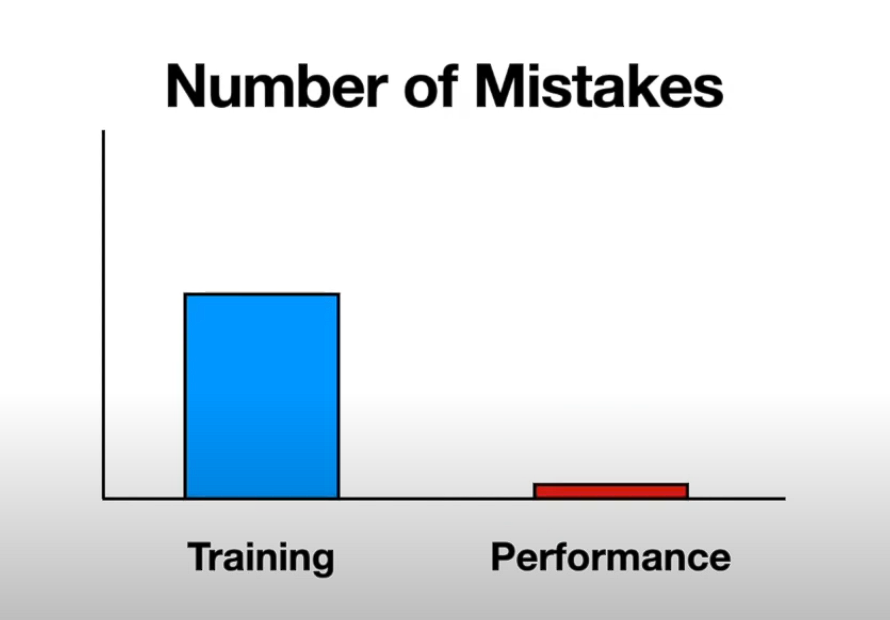
By increasing mistakes during training, this helps us improve our performance.
Desirable Difficulties Tool: Spacing, Interweaving, Contextual Variation
Spacing Techniques to increase difficulty in our training so we improve our performance.
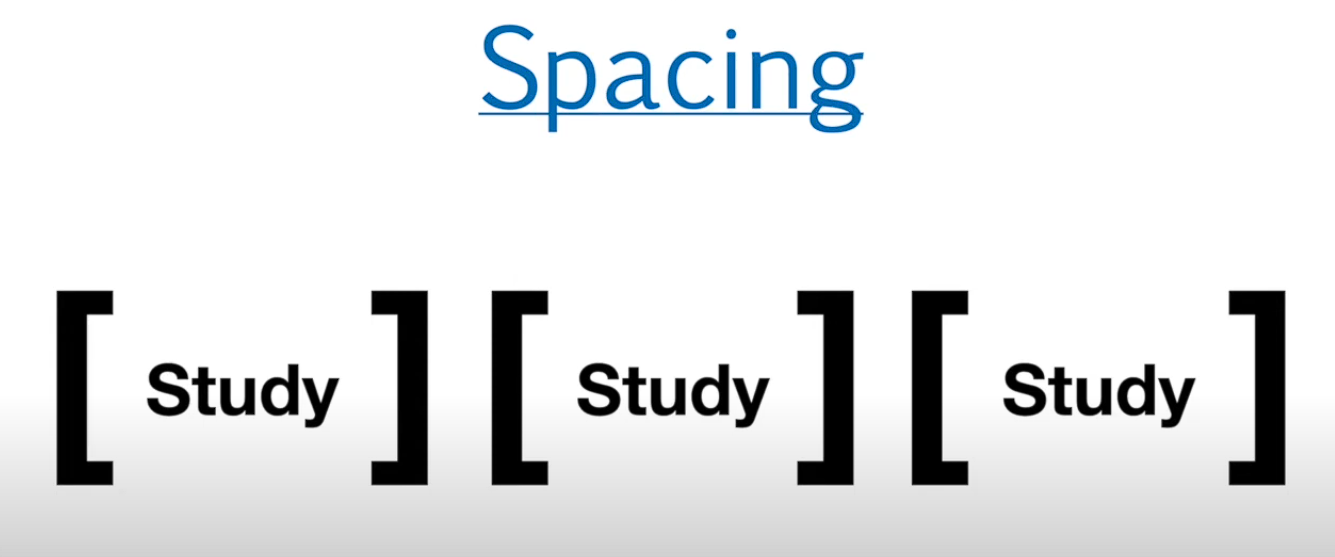
Spacing threat, exposed to forgetfulness curve.
Interleaving
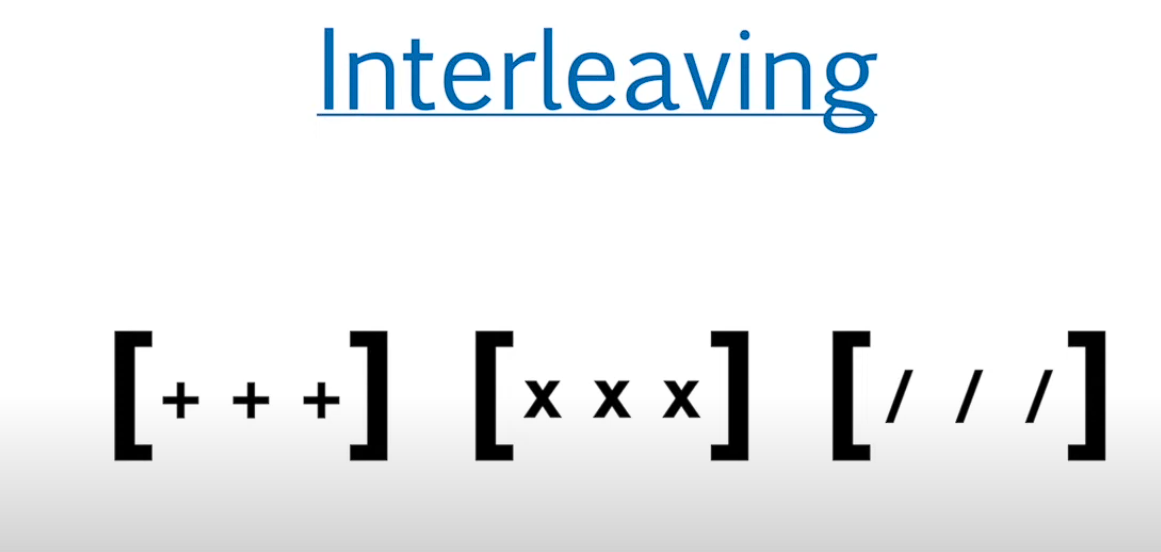
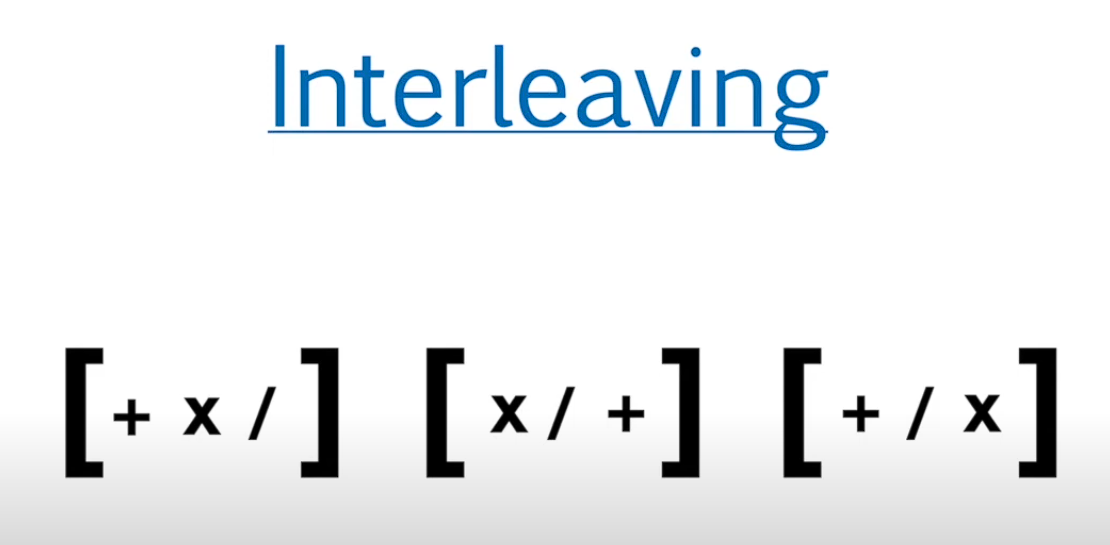
Contextual Variation During training it’s easy to design our learning approach as familiar as possible, where we could operate in flow. The problem with this is that when it counts (performance), familiarity are not packaged together. So by changing inputs, process, and outputs during training, and constantly changing it, it will get hard by when it matters it’s easier. Cause we are trained to perform.
Designing Difficulties
When designing difficulties to improve learning and help performance. You wanna be careful where you put the difficulties at, if you change the color of the font so you need to read “harder”, this don’t help you to understand better.
Same goes with the opposite,
Reference: